


Why Ambiguous Loss Feels So Hard to Move Through
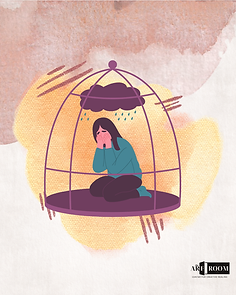
Some losses are painful because they are final. Other losses are painful because they are not.
That is part of what makes ambiguous loss so hard to move through.
Ambiguous loss is the kind of loss that does not come with clear closure, a simple ending, or a socially recognized roadmap for grief. Something important has changed, but the edges of the loss are blurry. The relationship may still exist in some form. The future may still technically be open. The person, role, or life you are grieving may not be fully gone — just altered, inaccessible, uncertain, or impossible to return to in the same way.

That kind of loss can leave people feeling stuck.
Not because they are grieving wrong. Not because they are refusing to move forward. But because the nervous system struggles when there is no clear resolution to organize around. With a more visible loss, there is often a shared understanding of what happened. Even when grief is still painful and nonlinear, there is usually a named event and a social acknowledgment that something ended.
Ambiguous loss does not always offer that.
You may be grieving a relationship that ended without closure. A family member who is physically present but emotionally changed or unavailable. A diagnosis that reshaped the future you thought you were moving toward. An estrangement that still leaves the door psychologically open. A version of yourself or your life that no longer exists, even though no one else sees it as “loss.”

Because the ending is unclear, grief can stay activated.
Part of you may know something has changed. Another part may still be searching for resolution, explanation, repair, or return. You may keep circling the same thoughts, the same questions, the same ache. You may feel caught between accepting what is and hoping for something different. That internal back-and-forth can be exhausting.
This is one reason ambiguous loss often feels so disorienting.

You may not know what you are supposed to do with your feelings. You may not know whether to hold on or let go. You may not know how to explain the pain to other people when even you are struggling to define it. You may feel like your grief has nowhere to land.
That lack of landing can create a strange emotional tension. People often describe feeling suspended — not fully in the past, not fully able to settle into the present, and not sure what the future is asking them to accept.
It can also make grief feel lonely.
When a loss does not look obvious from the outside, other people may miss how significant it is. They may offer quick reassurance, expect you to move on, or fail to see that the unresolved nature of the loss is exactly what makes it so painful. That lack of recognition can deepen the hurt. It is hard enough to grieve without closure. It is even harder to do it while wondering whether anyone else understands that there is something to grieve at all.

Ambiguous loss can also show up in ways that are easy to misread.
You may feel emotionally numb one day and overwhelmed the next. You may overfunction, overthink, shut down, or feel stuck in a constant low-level ache. You may tell yourself that because there was no clean ending, you should not still be affected this much. But ambiguity itself is often what keeps the grief active.
Therapy can help not by forcing false closure, but by helping you make room for the reality that some losses do not resolve neatly.

It can help you name what has changed, understand why it still feels so painful, and build a more compassionate relationship with your grief without demanding certainty that does not exist. It can also help you feel less alone in the parts of grief that have been hard to explain.
At The Art Room, we support people carrying grief that feels unfinished, invisible, or difficult to define. If your loss has no clear ending and your pain still feels stuck in motion, therapy can help you hold that complexity with more support and less self-doubt.
If your grief feels unresolved or hard to explain, explore therapy for grief that is hard to move through.


Comments